Our challenge to overcome the East Japan Earthquake

Chairman, Board of Regents, Hiromitsu Yoshioka

President, Shunichi Miyazaki


On March 11, 2011, our medical, educational and research facilities, as well as faculty, staff, and students were struck by the unexpected disaster of the East Japan earthquake.


We are fortunate that all facilities are functional with very minor damages and that none of the faculty, staff or students at our institution were injured.  However, some family members, relatives, and friends were lost or injured, and some suffered great damage to their homes.  The university deeply expresses sympathy and condolences to all who suffered from the disaster.


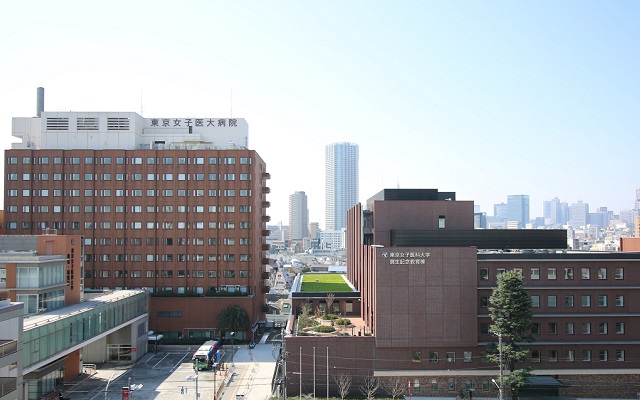
In the midst of this devastating situation, we are proud to say that our philosophy of ‘sincerity and compassion’, as stated in our constitution, was never interrupted during the event.  All affiliated hospitals continued to provide medical care to their maximum potential.  Even during the earthquake, no staff withdrew from their position until the patients’ safety was secured.  Educational and research staff took all necessary precautions including biosafety.  Our medical facilities continue to serve high quality medical care in the unstable social conditions evoked by the disaster.  One of our affiliated hospitals, the Yachiyo Medical Center, which is a designated core hospital during times of disaster, is currently operating under rotating blackouts.  Intensive care continues to be provided under limited power supply from the generator and new lives are being brought into the world under a dark light.  Other hospitals are providing medical care to the thousands of patients who have been seen at our hospitals and to new patients.  In addition, as one of the intact medical facilities near increasingly affected areas, we are accepting those with medical needs within the region. 


Education has been another important mission of the university.  We are again proud to say that we graduated new healthcare professionals from the School of Medicine, School of Nursing, and Vocational School of Nursing at the end of March, the final month of the Japanese academic year.  We believe they will become the new strength in medicine in the postquake era.  As the school year beings in April, our institution is making preparations to accept our newly incoming students with even higher expectancy.  The School of Medicine is launching a new curriculum, the MD Program 2011, as planned.  Since research activity is highly in fetters due to the limited power supply, strategies to start our advanced research are under consideration.


We are deeply grateful for the many concerns and prayers the university, staff, and students received from all over the world.  We, as Tokyo Women’s Medical University, will continue to fulfill its social responsibility in providing high quality education, research, and medicine and overcome this tragic event.  Nippon Ganbare.


April 1, 2011.


Normal 0 0 2 false false false MicrosoftInternetExplorer4

Tokyo Women’s Medical University’s Challenge to Overcome the Recent Disaster of the East Japan Earthquake


Chairman, Board of Regents, Hiromitsu Yoshioka

President, Shunichi Miyazaki


On March 11, 2011, our medical, educational and research facilities, as well as faculty, staff, and students were struck by the unexpected disaster of the East Japan earthquake.


We are fortunate that all facilities are functional with very minor damages and that none of the faculty, staff or students at our institution were injured.  However, some family members, relatives, and friends were lost or injured, and some suffered great damage to their homes.  The university deeply expresses sympathy and condolences to all who suffered from the disaster.


In the midst of this devastating situation, we are proud to say that our philosophy of ‘sincerity and compassion’, as stated in our constitution, was never interrupted during the event.  All affiliated hospitals continued to provide medical care to their maximum potential.  Even during the earthquake, no staff withdrew from their position until the patients’ safety was secured.  Educational and research staff took all necessary precautions including biosafety.  Our medical facilities continue to serve high quality medical care in the unstable social conditions evoked by the disaster.  One of our affiliated hospitals, the Yachiyo Medical Center, which is a designated core hospital during times of disaster, is currently operating under rotating blackouts.  Intensive care continues to be provided under limited power supply from the generator and new lives are being brought into the world under a dark light.  Other hospitals are providing medical care to the thousands of patients who have been seen at our hospitals and to new patients.  In addition, as one of the intact medical facilities near increasingly affected areas, we are accepting those with medical needs within the region. 


Education has been another important mission of the university.  We are again proud to say that we graduated new healthcare professionals from the School of Medicine, School of Nursing, and Vocational School of Nursing at the end of March, the final month of the Japanese academic year.  We believe they will become the new strength in medicine in the postquake era.  As the school year beings in April, our institution is making preparations to accept our newly incoming students with even higher expectancy.  The School of Medicine is launching a new curriculum, the MD Program 2011, as planned.  Since research activity is highly in fetters due to the limited power supply, strategies to start our advanced research are under consideration.


We are deeply grateful for the many concerns and prayers the university, staff, and students received from all over the world.  We, as Tokyo Women’s Medical University, will continue to fulfill its social responsibility in providing high quality education, research, and medicine and overcome this tragic event.  Nippon Ganbare.


April 1, 2011.