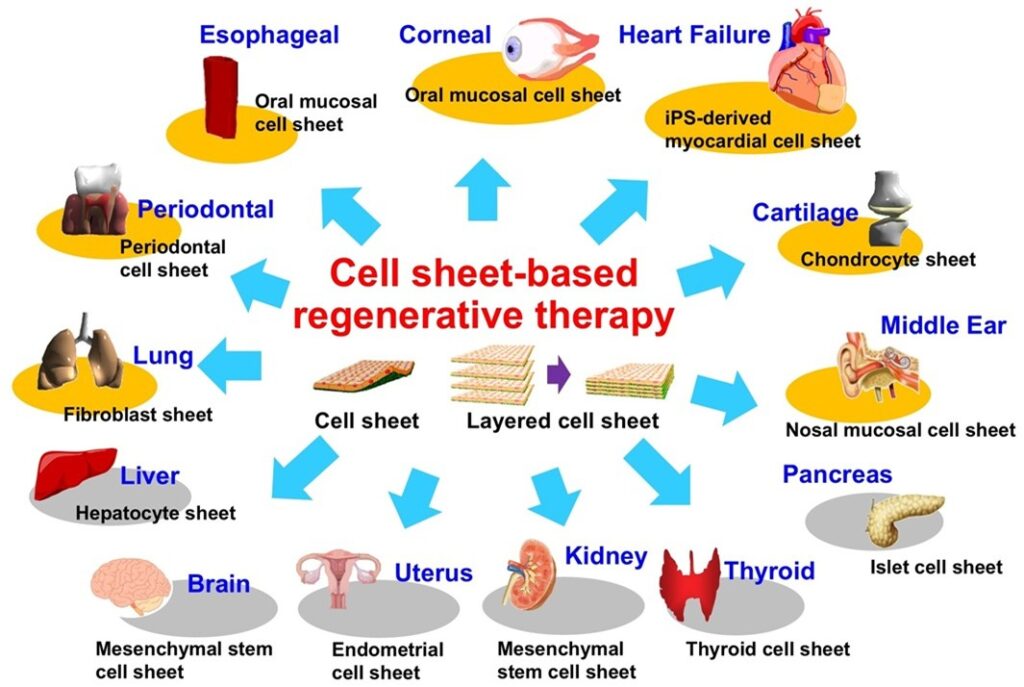
Enzyme-free recovered “cell sheets” retain adhesive proteins that act as biological glues. Therefore, cell sheets can be transplanted into living tissues by simply attaching them. We have been promoting cell-sheet-based regenerative medicine for various tissues and organs.
Regenerative Therapy for Diabetes
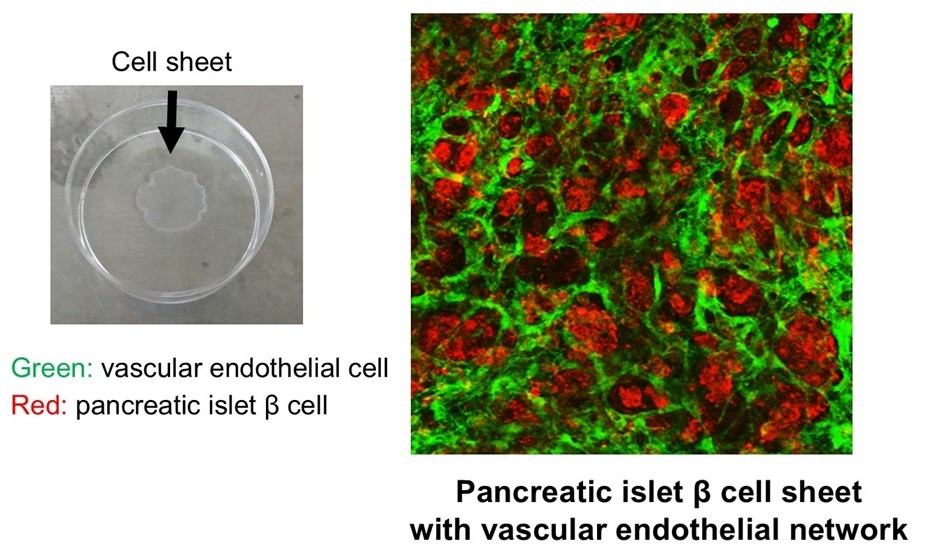
Diabetes is a disease that causes various complications throughout the body due to inadequate insulin secretion and insulin resistance. Our research group works on the research and development of cell sheets composed of insulin-secreting islet cells using temperature-responsive culture dish. As a new cell transplantation therapy for diabetes, we have been developing transplantable vascular-introduced islet cell sheets, which combine islet cells, mesenchymal stem cells, and vascular endothelial cells.
Ischemic Brain Disease Therapy
In collaboration with the Department of Neurosurgery of our medical hospital, our group are developing a novel therapy for cerebrovascular disorders. We have transplanted mesenchymal stem cell sheets into a rat cerebral infarction model, and reported that they can induce angiogenesis and nerve regeneration in the ischemic brain, leading to improvement of behavioral disorders. Currently, we are conducting research for clinical application to cerebral infarction and vascular dementia.
Pulmonary Air Leak Closure Surgery
No surgical technique has been developed to completely prevent pulmonary air leaks as the one of the complications after lung resection. In collaboration with the Department of Pulmonary Surgery of TWMU, we have revealed that fibroblast sheets are effective as a biosealant to prevent postoperative air leaks. We are currently working to establish a treatment for the closure of lung air leaks by transplantation of autologous skin-derived fibroblast sheets.