Transplantable Immuno-isolated Cell Sheet Device
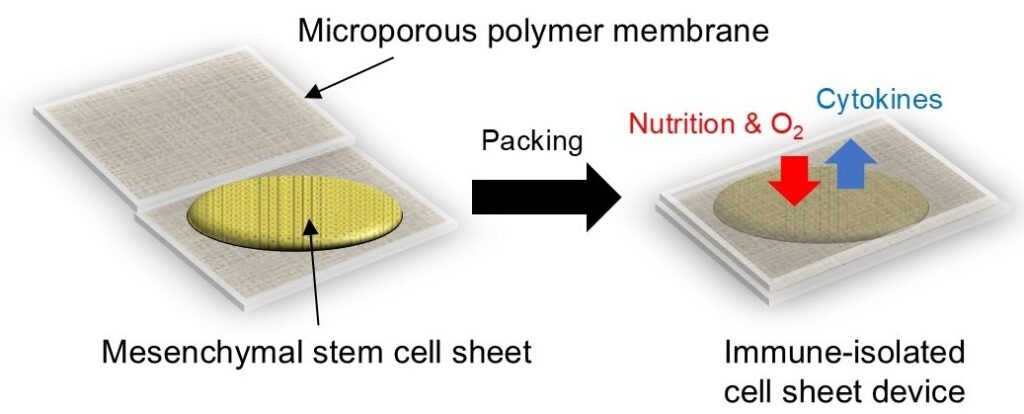
Secretory factors (e.g., cytokines) from mesenchymal stem cells (MSCs) show some effects such as inflammatory suppression, angiogenesis, and immunomodulation. Therefore, these MSC-secreted factors attract much attention in regenerative medicine for especially inflammatory diseases. As academia-industrial collaboration, we currently work on a transplantable immuno-isolated MSC sheet device using a microporous polymer membrane. This device facilitates the molecular permeability (e.g., nutrition, O2 and secretory factors) across the membrane pores, but inhibits the invasion of inflammatory cells from outside. Using this immuno-isolated MSC sheet device, the long-term sustained release of cytokines can be realized after in vivo transplantation.
Development of Cell-based Muscular Dystrophy Therapy
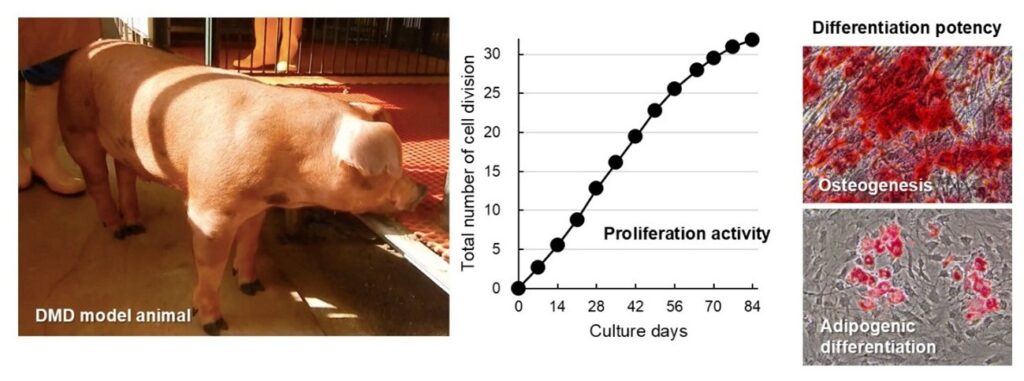
Muscular dystrophy is a progressive genetic disorder that causes gradual muscle deterioration. Duchenne muscular dystrophy (DMD) is the most common form of the disease, affecting 3 to 5 per 100,000 people in Japan. Mesenchymal stem cells (MSCs) are known to be involved in tissue repair and suppression of inflammation, and are expected to be a DMD treatment. In collaboration with the Department of Pediatrics and the Institute for Experimental Animals, the University of Tokyo, Meiji University, and Kyoto Animal Testing Center, we are evaluating the contribution of MSC transplantation, which has proliferative and differentiation potential, to the improvement of DMD using animal models of DMD. Based on this investigation, we aim to properly evaluate the efficacy of MSC transplantation and to link it to future clinical applications.